Rebecca Martin, Ph.D.

I am a researcher based in New York City with expertise in cognitive, social, and affective psychology and neuroscience, child development, and behavioral science.
Currently, I am the director of the Cognitive Science program at Columbia University.
I most recently completed a four year term as a senior research fellow at the Consumer Financial Protection Bureau where I used natural language processing and artificial intelligence methods to identify and quantify emotion and stress in consumer complaints.
As a research director in the Falk Lab for Communication Neuroscience at the Annenberg School of Communication at the University of Pennsylvania, I led a project investigating how health and climate change messaging go viral at the neural and behavioral levels. I was also a collaborator on Mindhive, an online citizen science platform and high school curriculum aimed at creating more authentic science learning experiences in classrooms, and building scientist-practitioner partnerships.
In my postdoc at the Hartley Lab at NYU, I used computational modeling to assess changes in learning and exploration in children, adolescents and adults. I received my Ph.D. at Columbia where I worked in Kevin Ochsner’s Social and Affective Neuroscience Lab using behavioral and neuroimaging methods to better understand how social influence and brain development shape emotional reactions.
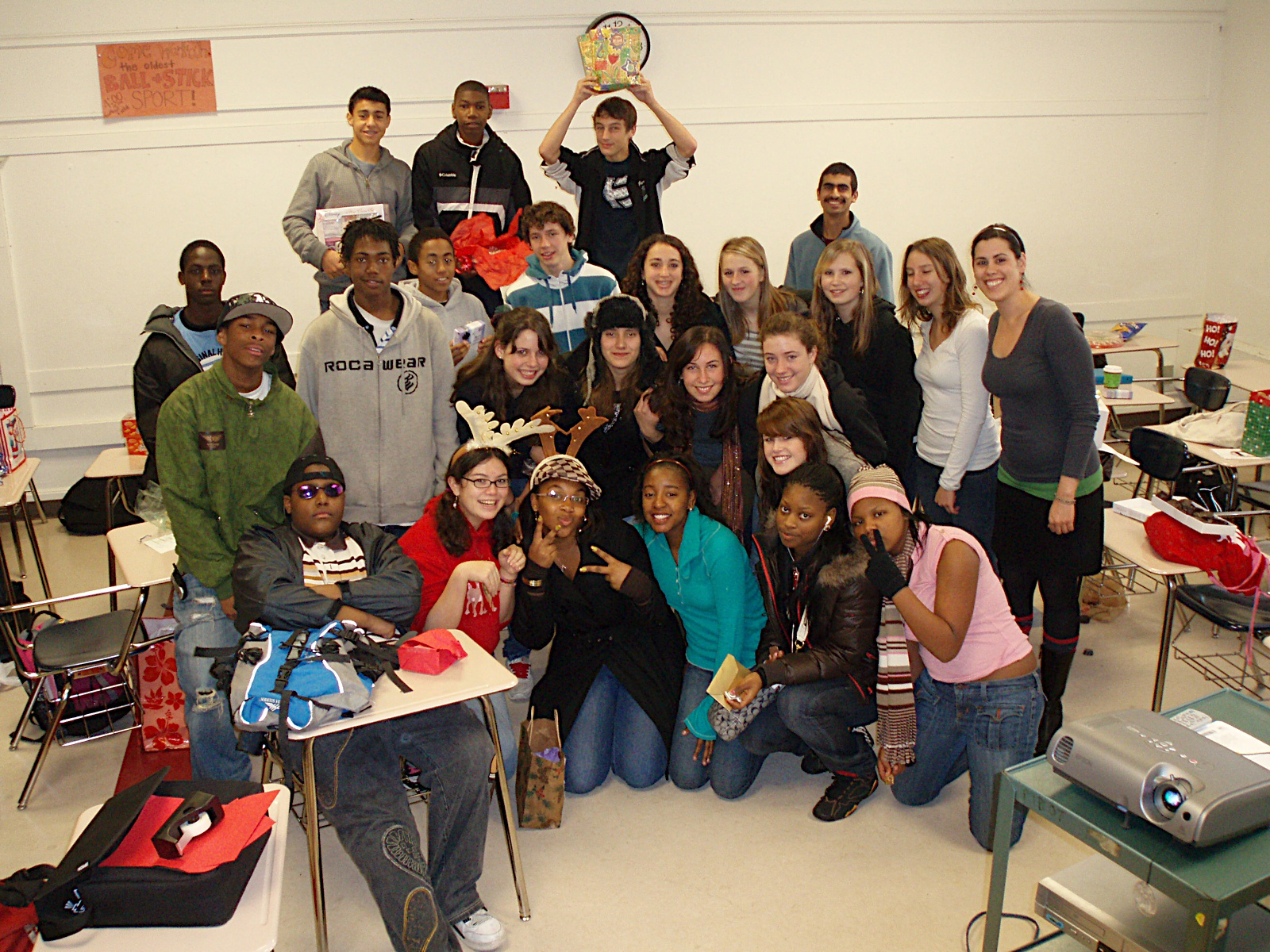
Prior to pursuing a Ph.D., I earned a master's degree in Mind, Brain, and Education from Harvard Graduate School of Education, a master's in Teaching from UC Santa Cruz, and a bachelor’s degree in history from New York University. Before I did brain research, I taught history at Berkeley High School, interned at Saturday Night Live, and was on the United States National Team for synchronized swimming.
Outside of work I am a mom to two small children so I spend a lot of time visiting playgrounds and reading children’s books. When I am not momming, I like to cook, read fiction, explore the city, garden, and hike.


Selected Publications
- Chan, H.-Y., Scholz, C., Cosme, D., Martin, R. E., Benitez, C., Resnick, A., Carreras-Tartak, J., Cooper, N., Paul, A. M., & Falk, E. B. (2023). Neural signals predict information sharing across cultures. Proceedings of the National Academy of Sciences, 120(44), e2313175120. https://doi.org/10.1073/pnas.2313175120
- Nussenbaum, K., Martin, R. E., Maulhardt, S., Yang, Y. (Jen), Bizzell-Hatcher, G., Bhatt, N. S., Koenig, M., Rosenbaum, G. M., O’Doherty, J. P., Cockburn, J., & Hartley, C. A. (2023). Novelty and uncertainty differentially drive exploration across development. eLife, 12, e84260. https://doi.org/10.7554/eLife.84260
- Matuk, C., Martin, R., Vasudevan, V., Burgas, K., Chaloner, K., Davidesco, I., Sadhukha, S., Shevchenko, Y., Bumbacher, E., & Dikker, S. (2021). Students Learning About Science by Investigating an Unfolding Pandemic. AERA Open, 7, 23328584211054850. https://doi.org/10.1177/23328584211054850
- Martin, R.E., Silvers, J.A., Hardi, F., Stephano, T., Helion, C., Insel, K., Franz, P.J., Ninova, E., Lander, J.P., Weber, J., Mischel, W., Casey, B.J., & Ochsner, K.N. (2019). Longitudinal structural changes in appetitive reactivity and regulation across development. Developmental Cognitive Neuroscience, 38, 100675. https://doi.org/10.1016/j.dcn.2019.100675
- Martin, R.E., Villanueva, Y., Stephano, T., Franz, P.J., & Ochsner, K.N. (2018). Social influence on food preference in adolescence and young adulthood. Journal of Experimental Psychology: General. 147(10), 1521–1530. https://doi.org/10.1037/xge0000469
- Silvers, J. A., Insel, C., Powers, A., Franz, P., Helion, C., Martin, R., Weber, J., Casey, B.J., Mischel, W., & Ochsner, K.N. (2016). The transition from childhood to adolescence is marked by a general decrease in amygdala reactivity and an affect-specific ventral-to-dorsal shift in medial prefrontal recruitment. Developmental Cognitive Neuroscience. http://doi.org/10.1016/j.dcn.2016.06.005
- Martin, R.E., & Ochsner, K.N. (2016). The neuroscience of emotion regulation development: implications for education. Current Opinion in Behavioral Sciences. 10, 142–148. http://doi.org/10.1016/j.cobeha.2016.06.006
- Silvers, J.A., Insel, C., Powers, A., Franz, P., Helion, C., Martin, R.E., Weber, J., Casey, B.J., Mischel, W., & Ochsner, K.N. (2016). vlPFC-vmPFC-amygdala interactions underlie age-related differences in cognitive regulation of emotion. Cerebral Cortex.
- West, M. R., Kraft, M. A., Finn, A. S., Martin, R. E., Duckworth, A. L., Gabrieli, C. F. O., & Gabrieli, J. D. E. (2015). Promise and paradox: measuring students’ non-cognitive skills and the impact of schooling. Educational Evaluation and Policy Analysis, 0162373715597298. http://doi.org/10.3102/0162373715597298
- Saygin, Z. M., Osher, D. E., Koldewyn, K., Martin, R. E., Finn, A., Saxe, R., Gabrieli, J. D. E., & Sheridan, M. (2015). Structural connectivity of the developing human amygdala. PLoS ONE, 10(4), e0125170. http://doi.org/10.1371/journal.pone.0125170
- Finn, A. S., Kraft, M. A., West, M. R., Leonard, J. A., Bish, C. E., Martin, R. E., Duckworth, A. L., Gabrieli, C. F. O., & Gabrieli, J. D. E. (2014). Cognitive skills, student achievement tests, and schools. Psychological Science, 25(3), 736–744. http://doi.org/10.1177/0956797613516008
- Sheridan, M., Kharitonova, M., Martin, R. E., Chatterjee, A., & Gabrieli, J. D. E. (2014). Neural substrates of the development of cognitive control in children ages 5–10 Years. Journal of Cognitive Neuroscience, 1–11. http://doi.org/10.1162/jocn_a_00597
- Kharitonova, M., Martin, R. E., Gabrieli, J. D. E., & Sheridan, M. A. (2013). Cortical gray-matter thinning is associated with age-related improvements on executive function tasks. Developmental Cognitive Neuroscience, 6, 61–71. http://doi.org/10.1016/j.dcn.2013.07.002
- Martin, R. E., & Groff, J. S. (2011). Collaborations in mind, brain, and education: an analysis of researcher–practitioner partnerships in three elementary school intervention studies. Mind, Brain, and Education, 5(3), 115–120. http://doi.org/10.1111/j.1751-228X.2011.01119